

Swimming with Whale Sharks in La Paz: Season, Rules and What to Expect
Updated: 1 day ago
You can't swim with whale sharks in Cabo San Lucas. The place to do it is La Paz Bay, about two hours north by road, where they gather every winter to feed. That makes it a full day trip from Cabo, and one worth planning properly.
This guide to swimming with whale sharks in La Paz covers when the season really starts, what the rules are and what it is actually like in the water. We run whale shark day trips from Cabo to La Paz, so this is what we tell our own guests before they book.
When is whale shark season in La Paz?
The official window runs from October 1 to April 30, but the season does not open on a fixed date. The swimming area only opens after CONANP, the agency that manages it, counts enough whale sharks inside it over several days of monitoring. If the numbers drop, the area can be suspended again.
In recent seasons it has opened in mid to late November: November 26 in 2023, November 13 in 2024 and mid-November in 2025.
December to February are the most reliable months. In October and early November there are usually not enough sharks yet. March is often still good, and by April many of them have moved on.
Why do whale sharks come to La Paz?
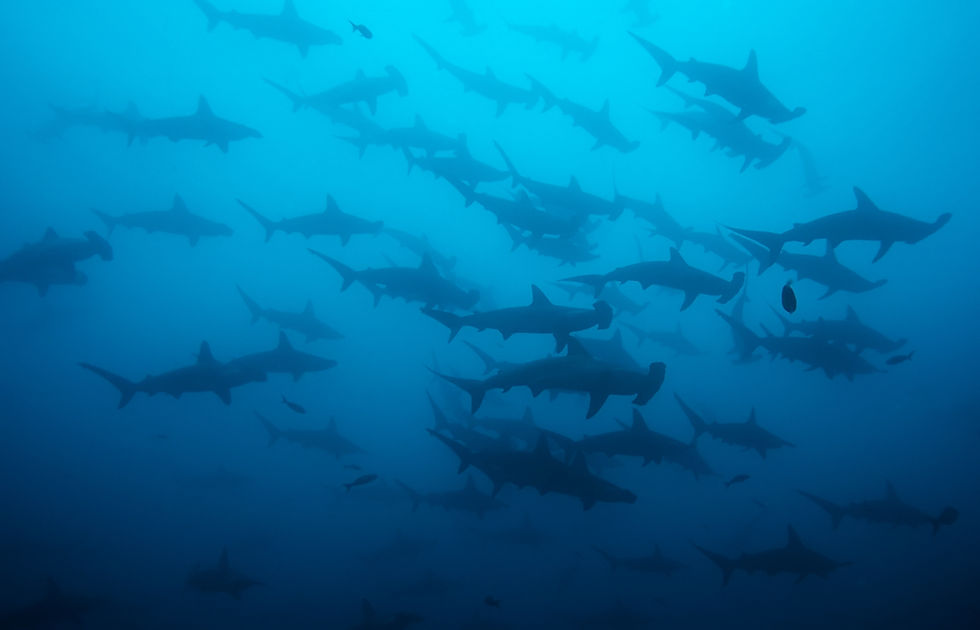
La Paz Bay is shallow, sheltered and full of plankton in winter, and plankton is what whale sharks eat. They are filter feeders: they swim slowly near the surface with their mouths open and strain their food out of the water. That is why you can spot them from a boat and swim next to them with just a mask and a snorkel.
Whale sharks are the largest fish in the sea and can reach 30 to 40 ft (10 to 12 m). The ones that gather in La Paz Bay are juveniles, under 30 ft (9 m) long, which is still far bigger than you. Each one has its own pattern of spots, like a fingerprint, and researchers use photos of it to tell them apart.
The rules for swimming with whale sharks in La Paz
The area is managed by Mexico's environment authorities, SEMARNAT and CONANP, and only boats with a permit can enter. These are the main rules:
No more than 14 boats can be in the swimming area at the same time, and boats enter in four daily time slots.
A boat can stay with a whale shark for up to 30 minutes.
A maximum of five swimmers and one guide can be in the water with a shark.
Swimmers keep at least 6.5 ft (2 m) from the head and sides, and 10 ft (3 m) from the tail.
No touching, no flash, no scuba and no free diving. You wear a wetsuit or a life jacket.
Each boat is given its time slot for the day, so the exact schedule of a tour is only known shortly before.

What it is really like in the water
Expect short, intense swims, not a long float. The boat places you ahead of the shark, the guide gives the signal, and you slide in and swim alongside it. A whale shark that looks slow from the boat is fast once you are next to it, so you kick hard for a few minutes, climb back on board and go
again. You usually get several swims.
The water is green and cloudy. That is the plankton, the reason the sharks are there. You will not see the whole animal from far away: it appears out of the green a few feet from you, and that is part of what makes it so impressive.
In winter the water is cool, usually between 66 and 72°F (19 to 22°C). The wetsuit keeps you warm and helps you float. You do not need to be an athlete, but you do need to be comfortable
swimming in open water with a mask and snorkel.
Three things make the difference once you are in:
Move slowly. Slide in without splashing and keep your kicks smooth.
Stay to the side. Never in front of the head or behind the tail.
Hands off. Touching harms the shark and ends the swim for everyone.
The day trip from Cabo San Lucas

La Paz is about two hours by road from Cabo San Lucas, so this is a full day, up to 12 hours door to door. We drive to La Paz, board the boat and head into the bay for our time slot.
After the whale sharks we stop at San Rafaelito to snorkel with the sea lions. Then comes a picnic-style lunch and the drive back. You can see how the day is organized on our whale shark tour from Cabo San Lucas page.
Children aged 10 and over can join if they are comfortable in the water. Friends or family who do not want to snorkel can stay on the boat and watch from there.
More than whale sharks: snorkeling with sea lions at San Rafaelito
The day does not end with the whale sharks. Before heading back to port we stop at San Rafaelito, a small rocky islet just off the coast near La Paz, marked by a navigation beacon and covered in seabirds. A colony of California sea lions lives on its rocks.
This part is the opposite of the whale shark swim. There is no rush and nothing to keep up with: you float on the surface next to the rocks and watch. The adults mostly rest in the sun. The young ones are the curious ones, and they often come over to look at you, twisting and diving around the group.
The same rule applies here as with the whale sharks: you do not touch them, and you let them decide how close they come.
San Rafaelito is a small colony close to La Paz, which is why it fits into the same day. The big one is Los Islotes, on Espíritu Santo Island, about an hour away by boat. If you are a certified diver and want a full day with sea lions, that is our sea lion diving trip in La Paz.

What if the area is closed on your date?
It happens. CONANP can suspend the season when there are too few sharks, as it did on January 27, 2025, and wind can keep the boats in port. We check the status before every trip. If the area is closed on your date, we help you move the trip or give you a full refund.
Is it ethical to swim with whale sharks in La Paz?
We think so, as long as the rules are followed. The sharks here are wild, nobody feeds them, and they can dive or swim away whenever they want. The limits on boats, swimmers and time exist so that the bay stays a place where they want to feed. What matters is choosing an operator with a permit that respects those limits, and doing your part in the water.
Swimming with whale sharks: quick answers
Can you swim with whale sharks in Cabo San Lucas?
No. Whale sharks do not gather in Cabo. The swimming area is in La Paz Bay, two hours away by road, and you can do it as a day trip from Cabo.
What is the best month to swim with whale sharks in La Paz?
December to February. The area usually opens in mid to late November and the official season ends on April 30.
Are whale sharks dangerous?
No. They are filter feeders and are not aggressive toward people. The only thing to watch is the tail, which is why you keep your distance from it.
Can you touch a whale shark?
No. Touching is prohibited, it harms the animal and it ends the swim for the whole group.
Can you scuba dive with whale sharks in La Paz?
No. Only snorkeling is allowed in the whale shark area.
Are whale sharks whales or sharks?
Sharks, which makes them fish. "Whale" only refers to their size. If you want to see actual whales, the humpbacks are in Cabo over the same months: see our guide to whale watching season in Cabo San Lucas.
Plan your whale shark trip
Pick a date between December and February, keep the whole day free and book early, because the number of boats is limited by law. Have a look at our whale shark tour in La Paz.


Comments