

Mobula Rays in Baja California Sur: A Once-in-a-Lifetime Ocean Safari
The Best Time to See Mobula Rays in Baja California Sur and What Makes This Migration Unique
Every year between April and July, the waters of Baja California Sur come alive with one of the most spectacular marine events on the planet: the mobula ray migration. Thousands of rays gather along the state's coastlines, making this region a bucket-list destination for travelers, photographers, and nature lovers seeking to witness massive schools swimming, feeding, and even leaping out of the water.
If you are planning a trip to the area during this season, there are two primary hotspots to experience it: Cabo San Lucas and La Ventana. While the phenomenon itself is the same, the overall vibe and the way you interact with them change completely depending on the location.
Below, we break down everything you need to know about this migration in Baja California Sur and how to choose the best destination for your ocean safari.
What Is the Mobula Ray Migration?
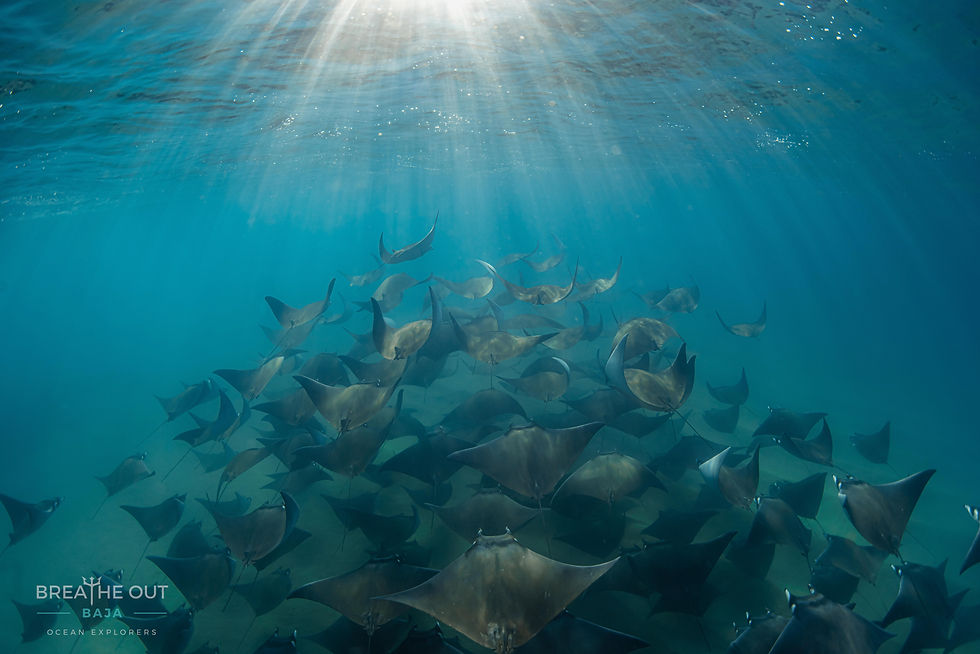
The mobula ray migration is one of the most breathtaking mass movements in the marine world. Every year, thousands of these rays travel to the nutrient-rich waters of Baja California Sur, resulting in the largest aggregations of this species found anywhere on Earth, with massive schools stretching for hundreds of meters.
During this journey, the mobulas glide in compact, perfectly synchronized schools while feeding on plankton. One of the most fascinating behaviors you can witness along the way is their incredible ability to launch themselves completely out of the water: an acrobatic spectacle that still intrigues scientists to this day.
Though often confused with giant manta rays, mobula rays are smaller, faster, and more agile. Witnessing their migration on such a massive scale is a dynamic, highly photogenic, and truly spectacular experience.

Why Do Mobula Rays Gather in Baja California Sur?
The massive schools of mobula rays in Baja California Sur are directly tied to ocean conditions, food availability, and their own behavioral patterns. During the spring and early summer (typically April to July), seasonal currents bring nutrient-rich waters to the region, creating the perfect environment for plankton blooms, which are their primary food source. Because of this abundance, massive numbers of rays converge along the coast to feed.
In addition to feeding, scientists believe these massive gatherings are also linked to social and reproductive behavior. It is very common to see mobulas traveling in synchronized groups and, at times, forming long chains, which could be related to courtship.
Another mesmerizing aspect is their habit of breaching, leaping out of the water time and time again. While scientists still don't know the exact reason behind this, theories suggest they might do it to communicate, clear parasites, or simply interact with one another. This perfect combination of abundant food, ideal ocean conditions, and potential mating activity is exactly what makes Baja California Sur one of the best places in the world to witness these breathtaking schools of rays.
The Best Season to See Mobula Rays in Baja California Sur
The best time to see mobula rays in Baja California Sur is between April and July, when ocean conditions create the perfect environment for their massive aggregations. During these months, marine currents bring the plankton that serves as their main food source.
Peak season usually happens in May and June, when sightings are much more consistent and the schools of rays can reach hundreds or even thousands of individuals. Additionally, the sea is generally calmer during this period and water temperatures begin to warm up, making it easier and much more comfortable to observe them and get into the water safely.
While it is possible to spot isolated mobula rays outside of these months, your chances of running into the massive "floating carpets" are significantly higher during this specific timeframe. If you are planning an ocean safari in the region, booking your trip during this window will maximize your chances of an unforgettable experience.
Where to See Mobula Rays: Cabo San Lucas vs La Ventana
Both Cabo San Lucas and La Ventana offer incredible opportunities to witness the mobula migration, but the in-water experience and the overall trip vibe change completely depending on what you are looking for.
Cabo San Lucas: Convenience and biodiversity at your fingertips
This is the ideal option if you are looking for straightforward logistics, quick access, and are staying in the Los Cabos area.
The experience: Safaris here tend to be highly dynamic and well-rounded. On a single outing, in addition to swimming with massive schools of mobulas, it is very common to encounter dolphins, sea lions, and other pelagic species out in the blue.
Who it’s for: Perfect for those who prioritize the convenience of departing directly from the marina, want to combine the tour with other tourist activities, and wish to enjoy a world-class ocean safari without straying far from city amenities.
La Ventana: A wild, immersive adventure
Located about two and a half hours north of Cabo, this area of the Sea of Cortez offers a much more rustic, untouched environment that is 100% focused on wildlife.
The experience: Encounters here feel more intimate, isolated, and wild. With far less boat traffic compared to Cabo, you get the feeling of having the entire ocean to yourself. The schools of mobulas here are often immense, moving through spectacular open water.
Who it’s for: The preferred choice for photographers and travelers looking for a raw, full-day experience to fully immerse themselves in Baja’s rugged nature.
The Verdict
If you want logistical convenience, fast access, and encounters with multiple species, Cabo San Lucas is your spot. If you prefer to unplug in a wilder setting and are looking for a deep, quiet connection with the ocean, the trip to La Ventana is absolutely worth it.
Travel Note: The best part is that you don't have to choose your accommodation based on this. We operate both experiences out of our base in Cabo San Lucas. You can do the local safari in Cabo or join our day trip to La Ventana, where we handle all the logistics so you only have to worry about enjoying the ocean.
Can You Swim with Mobula Rays?
Yes, it is often possible to swim with mobula rays, but it always depends on ocean conditions, the animals' behavior, and strictly following responsible wildlife viewing practices. Mobulas are fast, sensitive, and constantly on the move, meaning any interaction must always happen entirely on their own terms. A responsible operator will never chase or encircle them. Instead, they will position the boat at a respectful distance so that, if conditions allow, you can slide into the water quietly and watch them pass by.
To ensure a safe and respectful encounter, these are the key guidelines to follow once you are in the water:
Swim parallel to the group: Match their pace and avoid swimming directly in front of them or crossing their path to cut them off.
Keep your distance from the surface: Avoid freediving directly down onto the school, as this typically stresses the rays and causes the group to scatter.
Move calmly: Maintain a slow, controlled swim. Sudden movements or excessive splashing can easily spook them.
Do not touch or chase the animals: Let the encounter flow naturally. If you stay calm and give them their space, they will often approach you out of pure curiosity, giving you a much closer and more magical experience.
It is important to remember that we are interacting with wild animals in their natural habitat, so a close encounter is never 100% guaranteed. There will be days when the mobulas prefer to keep their distance and we can only observe them from the boat (which, considering the size of the groups and their acrobatic leaps, is still an incredible sight). Respecting their time and space not only ensures your safety, but also guarantees the long-term conservation of this unique ocean spectacle.

Tips for an Ethical and Unforgettable Mobula Ray Tour
Experiencing the mobula ray migration in Baja California Sur is one of the most jaw-dropping adventures the ocean has to offer, but how you choose to do it makes all the difference. To get the most out of your ocean safari while respecting marine life, keep these essential tips in mind:
Choose a responsible operator: Look for a company that prioritizes conservation, employs certified guides, and strictly follows protection guidelines without harassing or chasing wildlife.
Use reef-safe sunscreen: Traditional chemical sunscreens cause severe damage to the ecosystem. Opt for mineral-based, biodegradable sunscreens (using zinc oxide), or better yet, wear a UV-protection rash guard or a wetsuit.
Listen to your guide at all times: Ocean conditions and animal behavior can change in a matter of seconds. Paying close attention to instructions before jumping into the water is key to your safety and the well-being of the rays.
Be patient and flexible: Remember that you are entering a wild environment and nature works on its own schedule. Staying patient almost always rewards you with the most magical, spontaneous encounters.
Bring the right gear: A high-quality mask that fits your face properly makes a massive difference when taking in the scale of the schools underwater. Additionally, a wetsuit will keep you comfortable and warm if you spend a long time floating on the surface.
Tours that prioritize sustainability don't just offer a deeper, more intimate, and higher-quality experience; they also play a vital role in protecting these incredible animals for future generations.
Ready to experience the mobula ray migration?
Experience the mobula ray migration in Cabo San Lucas, or join our day trip from Cabo to La Ventana, and witness one of the most jaw-dropping wildlife phenomena on our planet.


Comments