

Swimming with Orcas in Baja California Sur: Rules and Season
Updated: Oct 5
Updated October 2026 Orcas live in the waters of Baja California Sur all year. That is the good news. The rest is less simple: there is no orca season, nobody can promise you a sighting, and swimming with orcas in Baja California Sur is only allowed in one place, under rules that are still being written.
We run ocean safaris from Cabo San Lucas and in La Ventana, and we were one of the certified operators in the first regulated season. This guide explains what is legal, what the rules say, and what a day looking for orcas is really like.

Is swimming with orcas in Baja California Sur legal?
Only in La Ventana, only with authorized operators, and only when the authorities open the activity. Right now it is out of season.
Here is how it got there.
Until 2025, swimming with orcas in Mexico was a gray area. It was not banned and it was not regulated, and in the busy months dozens of boats could end up around a single pod.
On August 1, 2025, Mexico's environmental authority, SEMARNAT, put the first management plan for watching and swimming with orcas into effect. It was a one-year pilot, valid until July 31, 2026, and it covered an area of about 428 square miles (1,109 km²) around La Ventana and the Cerralvo Channel. Operators, captains and guides had to be trained and authorized, and permits were tied to specific dates.
Breathe Out Baja was a certified operator during that first regulated season.
That period has now ended. As of October 2026, swimming with orcas is out of season, and the authorities have not yet said what the rules will be for 2027. The plan is new for everyone, including the people who wrote it. We will update this page as soon as there is an official decision.
Outside La Ventana, there has never been a plan that allows people in the water with orcas. In Cabo San Lucas, Loreto or Cabo Pulmo, the legal way to see them is from the boat.

The rules of the first regulated season
These were the main rules of the 2025 to 2026 plan. The next plan may change them, but they show what a legal encounter looks like.
Rule | What the plan said |
Boats per day | 24 in the whole zone |
Boat size | Under 33 ft (10 m) |
People in the water | 5 per boat, including the guide |
Time with a pod | 30 minutes per boat |
Approach | Stop at 330 ft (100 m), wait at 200 ft (60 m), no closer than 65 ft (20 m) |
How you swim | At the surface only. No scuba. |
Not allowed | Touching, feeding, drones, chasing |
There was one more rule that mattered more than any number: you could only get in when the orcas' behavior allowed it. If they were calm, socializing or feeding on small prey such as rays, the guide could let people in. If they were resting or hunting large prey, everybody stayed on the boat.
When is the best time to see orcas in Baja California Sur?
There is no best month. Orcas are here all year, and they move where the food is.
In La Ventana they are seen more often between April and July, when they follow the mobula ray migration. That is also when the sea there is calmest for small boats. Around Cabo San Lucas, where the Pacific meets the Sea of Cortez, they can show up in any month.
Even in the best months, most days at sea pass without orcas. Anyone who sells you a guaranteed orca encounter is not telling you the truth.

What orcas eat in Baja, and why they come here
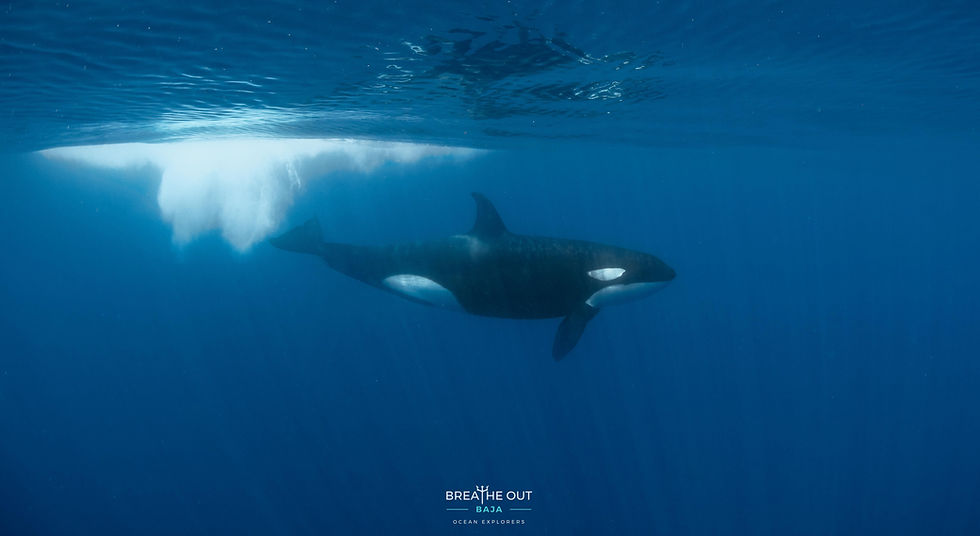
The orcas of Baja belong to the Eastern Tropical Pacific population. They are residents of these waters, and different family groups specialize in different prey. They teach those techniques to their calves.
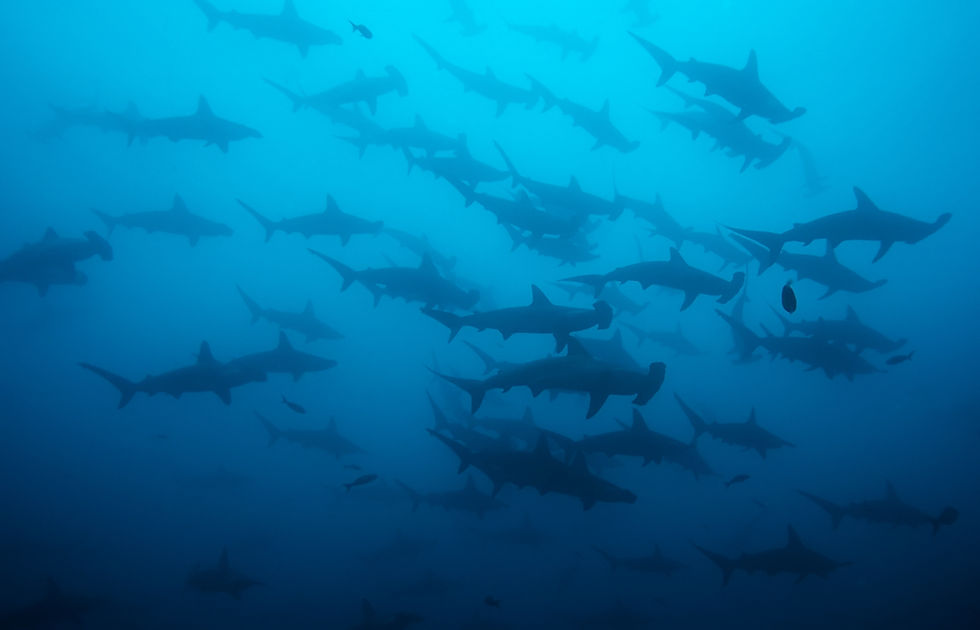
Rays and sharks. Some pods hunt mobula rays, stingrays and sharks. They flip sharks upside down to immobilize them and eat the liver.
Dolphins. Other pods ignore the rays and go after common and bottlenose dolphins.
Whale sharks. In 2024, scientists described a pod in the Gulf of California that hunts whale sharks, the largest fish in the world.
They have also been seen hunting ocean sunfish, sea turtles and whale calves. In the Sea of Cortez, nothing big is off their menu.
How we look for orcas
We don't drive around hoping. Local captains and fishermen share sightings in real time, and on board we scan with binoculars for blows, dorsal fins and birds working over the water.
A safari in La Ventana means 5 to 6 hours on the water, and in Cabo up to 5. Most of that time is searching. Along the way we usually find other animals: dolphins, mobulas, sea turtles, sea lions and, in season, whales.
When orcas do appear, the captain slows down and keeps the boat to one side of their path. We never cut in front of them or follow from behind. Often they are the ones who come closer and pass right under the boat. We carry a hydrophone, so sometimes you can hear them too.

Is it safe to be near orcas in the wild?
There is no record of a wild orca killing a person. The name "killer whale" comes from an old Spanish expression, asesina de ballenas, whale killer, because sailors saw them hunting large whales.
Orcas are intelligent and social, and around boats they are usually curious or indifferent. They are also big, fast predators, which is why the guide reads their behavior first. If they are hunting or restless, we watch from the boat. That decision is not negotiable.
How many days do you need?
One day can be enough, and sometimes it is. But orcas are unpredictable, so two or three days on the water give you a much better chance than one.
Our advice is to come for the ocean and not only for the orcas. People who board with one animal in mind often miss a very good day. People who come to see what the sea brings are rarely disappointed.
How to choose a responsible operator
Orcas use sound to hunt and to talk to each other, and many of the groups seen here are females with calves. Too many boats, engine noise and swimmers jumping in front of them change how they behave.
These are warning signs:
"Guaranteed orcas", or photos sold as an everyday result.
An operator who says you can swim with orcas in Cabo San Lucas.
Scuba gear, drones or chasing a pod that keeps moving away.
No clear answer when you ask about permits and the current rules.

Quick answers about swimming with orcas
Can you swim with orcas in Cabo San Lucas?
No. There is no plan that allows it in Cabo. Here orcas are watched from the boat, at a respectful distance.
Can you swim with orcas in La Ventana right now?
Not at the moment. The first regulated season ended on July 31, 2026, and the rules for the next one have not been published. Watching orcas from the boat is still possible on an ocean safari, when they appear.
Can you scuba dive with orcas?
No. Even in the regulated season it was surface snorkeling only, with no scuba.
Can I book a trip only for orcas?
No such trip exists, with us or with anyone honest. Orcas are one of the animals you may meet on an ocean safari. We go out to find wildlife, and the sea decides which.
What else will I see?
Depending on the month: mobula rays, dolphins, sea turtles, sea lions, sharks and whales. From late fall to spring you can also snorkel with whale sharks in La Paz.
What should I bring?
A swimsuit, sunglasses, a hat, a sweater or light jacket, a camera and seasickness tablets if you need them. We provide the snorkel gear, the wetsuit, towels and reef-friendly sunscreen.

Join an ocean safari in Baja
If you want an honest chance of seeing orcas, with a team that was certified for the first regulated season and follows the rules, choose the trip that fits your time:
Ocean Safari in La Ventana: a full day in the Sea of Cortez, best from April to July.
Ocean Safari in Cabo San Lucas: up to 5 hours, all year, with no drive.


Comments